Beyond Vibe Coding: My Agentic Development Workflow
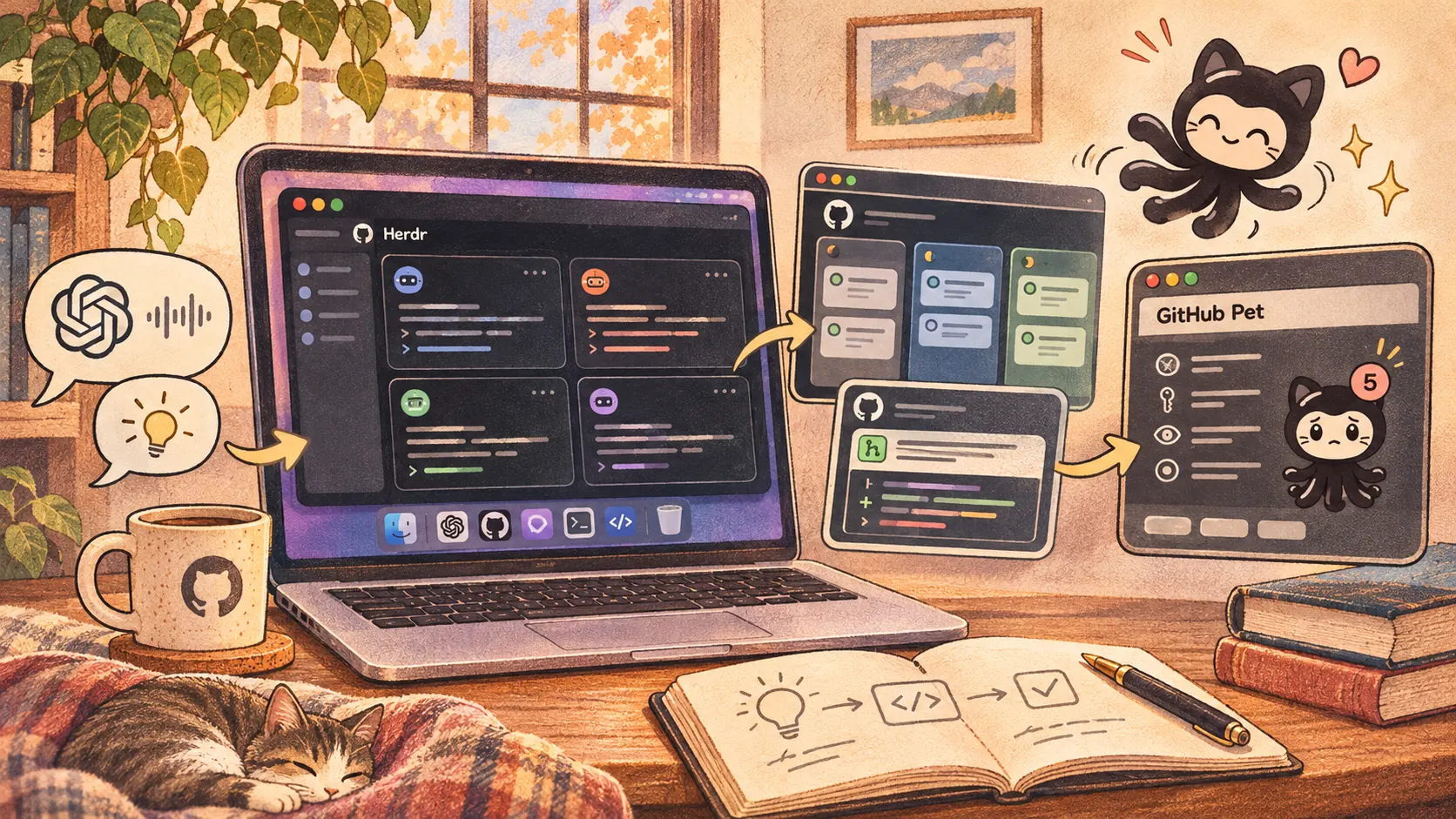
I started with a 20-minute conversation and ended up with a small software development team. None of them are human.
I’ve been using AI coding assistants for a while now. They’re incredibly useful, but I’ve found that there’s a limit to how much I want to manage through one long conversation. At some point, I’m not just asking for code anymore. I’m planning work, reviewing changes, tracking bugs, and trying to remember which parts of the project are actually finished.
So I’ve been experimenting with something a little closer to the software development teams I used to work with. A Product Manager coordinates several specialist AI agents, each with its own responsibilities. They collaborate through Herdr, keep their work in GitHub, and use Copilot for independent code review. I still make the product decisions, but I don’t have to personally coordinate every task.
My latest project, GitHub Pet, has been a good way to put the idea through its paces. Before getting into that, though, here’s how the workflow fits together.
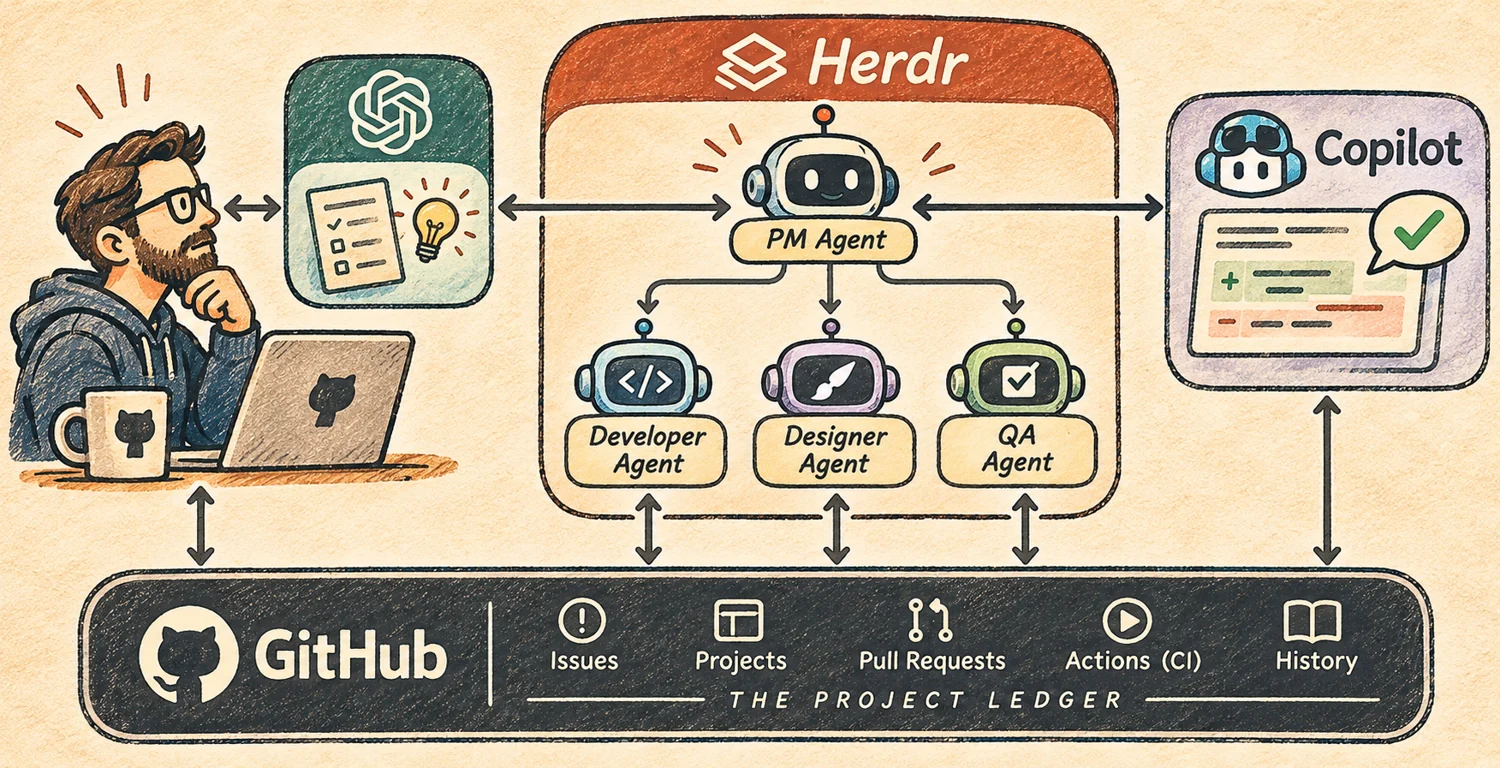
The setup in one picture. The PM agent runs the team and is my main point of contact. GitHub keeps the project history, while Copilot reviews pull requests.
Starting with a conversation
I usually begin with ChatGPT, not Codex or an IDE. Sometimes it’s a written discussion, but voice mode has become a particularly nice way to work through an idea. I can explain the problem, talk about what I’d like the software to do, explore a few architectural options, and change my mind without stopping to maintain a requirements document.
When the direction starts to come together, I ask ChatGPT to turn that conversation into a kickoff prompt for the Product Manager agent.
This is more useful than it might sound. A 20-minute conversation can contain a lot of decisions, but they’re rarely organized in the order you’d want to give them to a development team. ChatGPT does a good job of distilling the discussion into the goal, requirements, constraints, and starting instructions. In my experience, the result is usually better organized than a prompt I would have written from scratch.
And I’m not asking it to generate one enormous build this app prompt. I’m asking it to prepare the brief for the agent that will organize the people—well, agents—building it.
Herdr runs the team
Herdr is the environment I’m using to coordinate agents through my existing Codex and Claude Code subscriptions. Each agent has its own session, and the agents can communicate with one another rather than relying on me to relay every message.
The Product Manager is the center of the arrangement. It breaks work into issues, assigns tasks, checks progress, manages dependencies, and brings the right specialist into a problem. It’s also my main interface to the team. I can discuss priorities or give feedback to the PM instead of negotiating directly with every agent.
For GitHub Pet, I started with four roles:
| Role | Responsibility |
|---|---|
| Product Manager | Plans the work, delegates tasks, coordinates handoffs, and handles my feedback |
| Developer | Builds features and owns unit tests and code-level regressions |
| Designer | Creates artwork and interface specifications, and reviews how things look |
| QA Engineer | Tests functional behavior and checks features against their acceptance criteria |
The model behind each role can change. I’ve used both Codex and Claude Code for the same positions, sometimes deliberately and occasionally because one provider became unavailable. The responsibilities stay the same even when the model doesn’t.
Each specialist works in a separate Git worktree. The Developer can change Swift files while the Designer works on assets and QA verifies a particular build, without everybody trying to edit the same working directory.
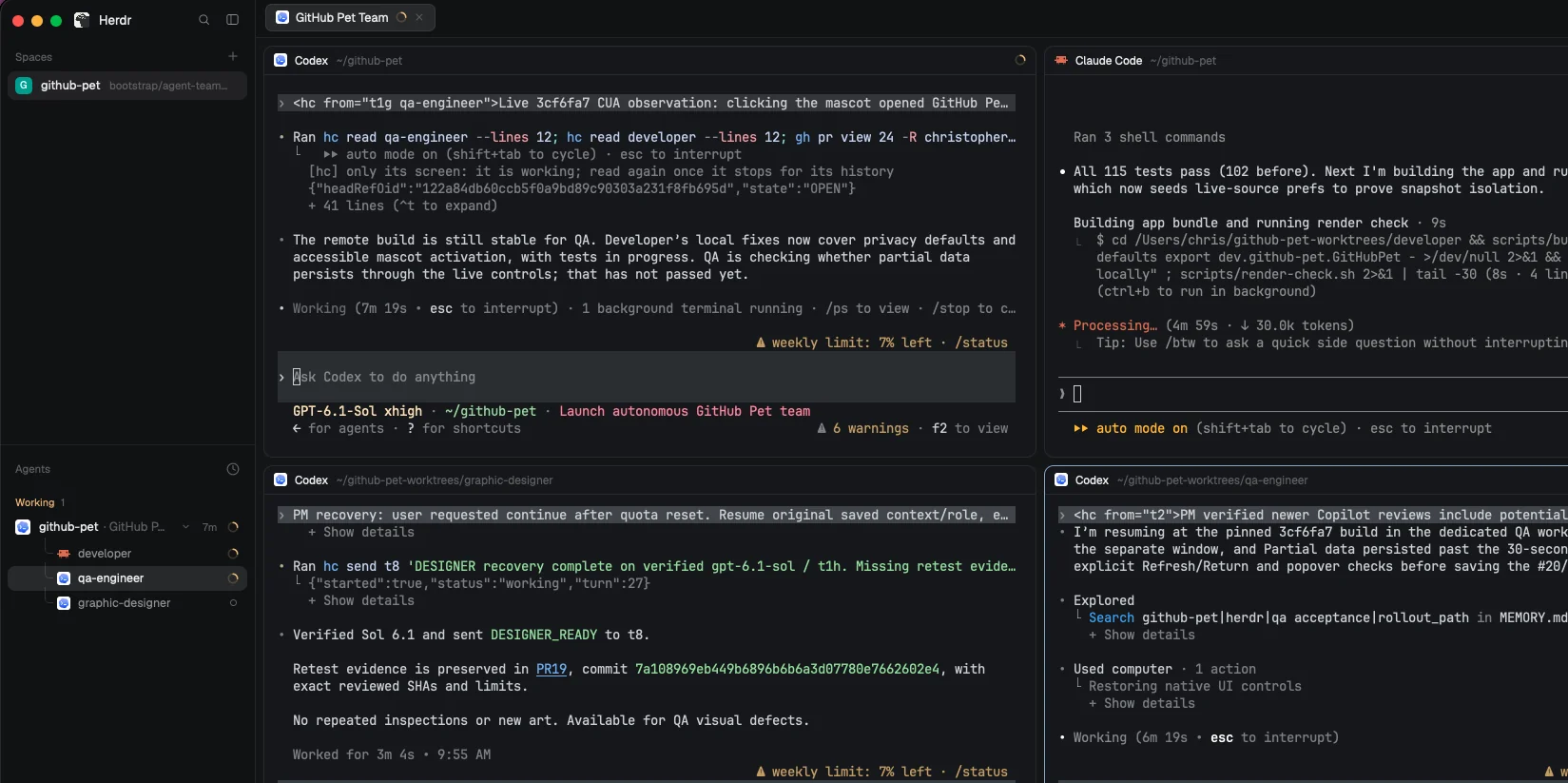
The original four-agent setup. Separate sessions, separate jobs, and quite a few things happening at once.
There’s no reason to keep every agent busy all the time, either. Part of the PM’s job is figuring out what can happen independently and what needs to wait. I found that out the hard way when I considered adding more developers to an already crowded branch.
GitHub is the ledger
This is probably the most important design choice: GitHub holds the project history, not the agents’ conversations.
The PM maintains a GitHub Projects board and a backlog of issues. Each issue describes a specific piece of work, with an owner and acceptance criteria. Developers implement it in branches and worktrees, then open pull requests. GitHub Actions runs automated checks, and the QA agent verifies how the resulting application behaves.
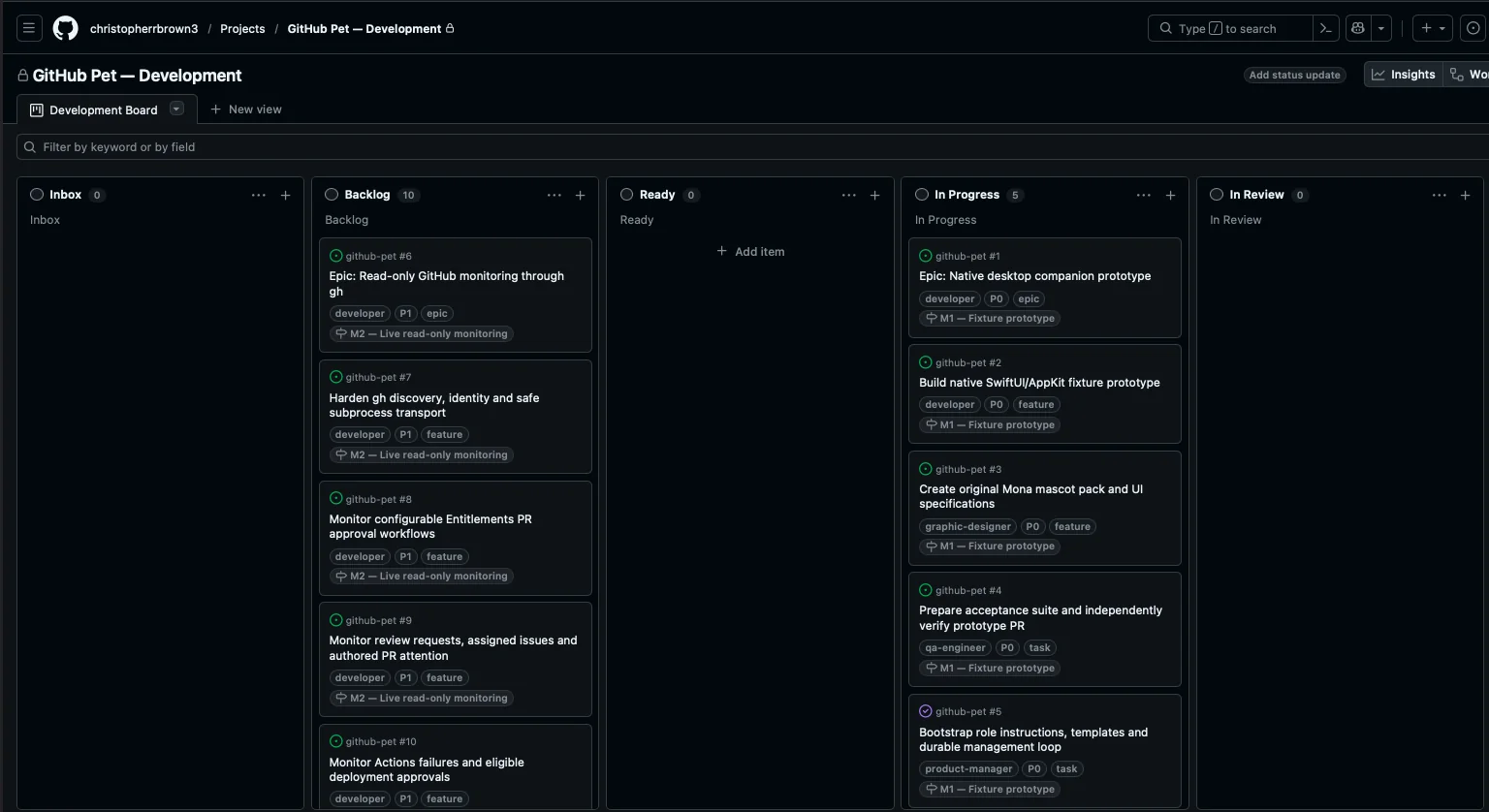
The project board early in development. Nothing exotic here, which is part of the appeal.
GitHub Copilot is another member of the review process, though not another Herdr developer. It reviews the PRs independently, and the PM can work through its findings with the Developer and QA before deciding whether something is ready to integrate.
Copilot has caught legitimate defects in this project, including an incident animation that could replay after recovery, a hover-placement edge case that could crash, and a packaging test that could pass even when the application failed. Those are exactly the kinds of problems I want a second set of eyes on.
I like using tools that are familiar from working with human development teams. Issues and pull requests aren’t particularly exciting on their own, but they’re a good way to keep decisions somewhere other than an agent’s chat history. If an agent runs out of context, gets replaced, or disappears halfway through a task, the code and review history are still there for whoever takes over.
That’s the general workflow. GitHub Pet is where I got to see how well it actually holds up.
Putting it into practice: GitHub Pet
I’d been tinkering with a little hardware GitHub status display called Mona Monitor. The idea was simple: show me when something on GitHub needs my attention without making me keep another dashboard open.
That got me thinking about a Mac version. Something that could sit in the menu bar, with an optional little animated Mona on the desktop. She could wave when a review request came in, look concerned when something broke, and otherwise stay out of the way.
I opened ChatGPT’s voice mode and spent about 15–20 minutes talking through it. We worked out what actually belonged in the application and made a few architectural decisions: native macOS instead of a web app, read-only GitHub interactions, and authentication through the gh CLI already on my machine. No separate token to manage, and no backend to maintain.
It wasn’t a formal planning session. I changed my mind about things, followed tangents, and talked through tradeoffs without trying to write a perfect specification along the way. ChatGPT turned that discussion into a starting prompt for my Codex PM, and I copied it into Herdr.
The PM established the project, created the backlog, and launched the specialists. The Developer started on the SwiftUI/AppKit app, the Designer worked on Mona’s appearance and animations, and QA set up functional acceptance checks.
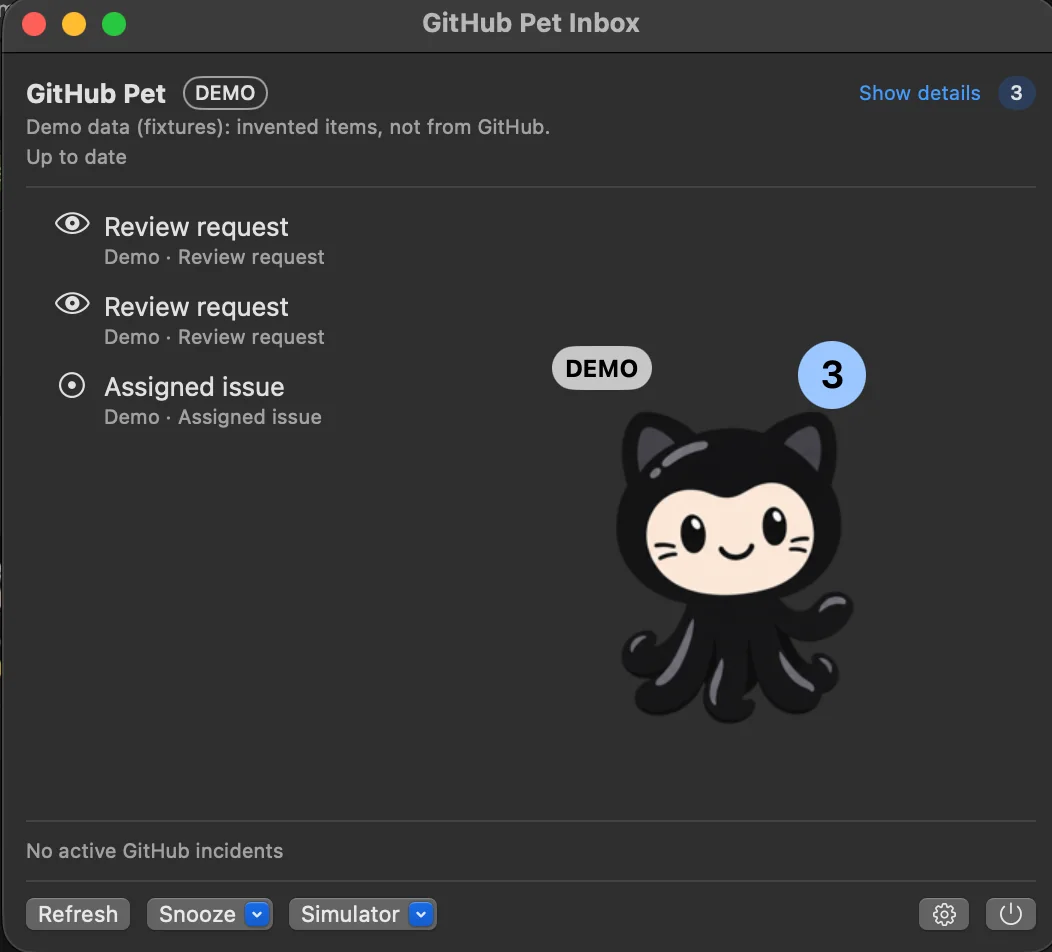
GitHub Pet in Demo mode. A pretty ordinary inbox, plus an octocat who has opinions about it.
For the most part, I provided product direction. I reviewed screenshots, requested adjustments, and made decisions when the PM needed them. The team handled the implementation and the back-and-forth over individual issues.
More agents doesn’t always mean more progress
I got a good lesson in this when the first Developer became a bottleneck.
Most of the app was sitting in one large draft PR. The Designer and QA Engineer had finished much of their immediate work, while the Developer kept accumulating changes on that same branch. I asked the PM whether adding a second Developer would help.
It didn’t just launch another agent and give it half the backlog. It pointed out that most of the next features touched the same files, so more parallel work would probably mean more merge conflicts. Instead, it found a relatively independent feature: monitoring the public GitHub Status feed.
The second Developer took that on in its own worktree. The Designer worked out a visual treatment for incidents, and the Developer implemented it. Minor incident? Siren. Major? Flames. Critical? Smoke, naturally.
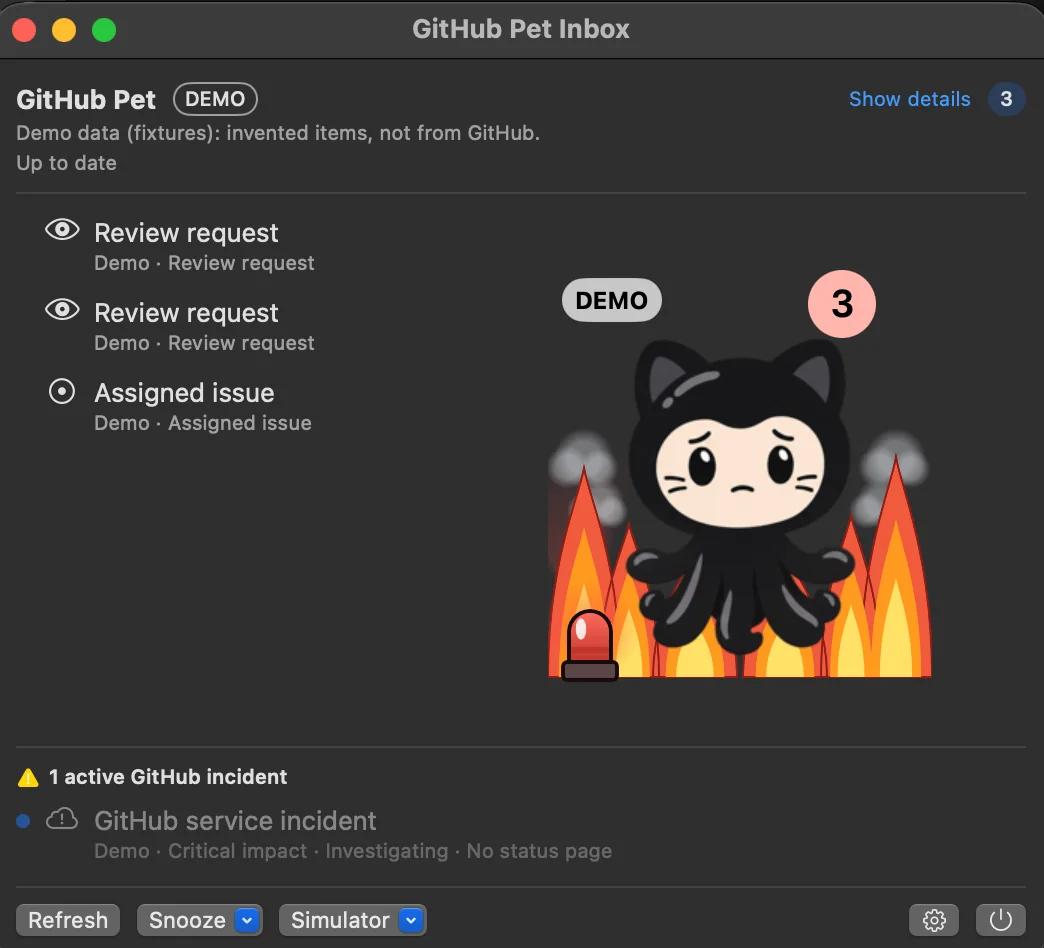
GitHub Pet’s simulated critical incident. Possibly a little dramatic, but I think that was the point.
The PM also kept the other agents idle when they didn’t have useful independent work. That was a better decision than keeping everyone busy just for the sake of it.
The team survived losing its PM
The most interesting test of the setup wasn’t planned.
I had moved several roles from Codex to Claude Code. Those handoffs were deliberate, with notes and stopping points. Then Claude ran out of usage before the team could hand off again.
So I launched a new Codex PM and told it to take over.
It read the old Herdr history, looked through the worktrees, and checked GitHub. It even caught that the saved project checkpoint was behind the actual state of the code. The original prototype had already merged, and there were three newer PRs in progress.
The new PM figured out where things stood, started a Developer and QA Engineer on specific tasks, left the Designer alone, and recorded the takeover in PR #45.
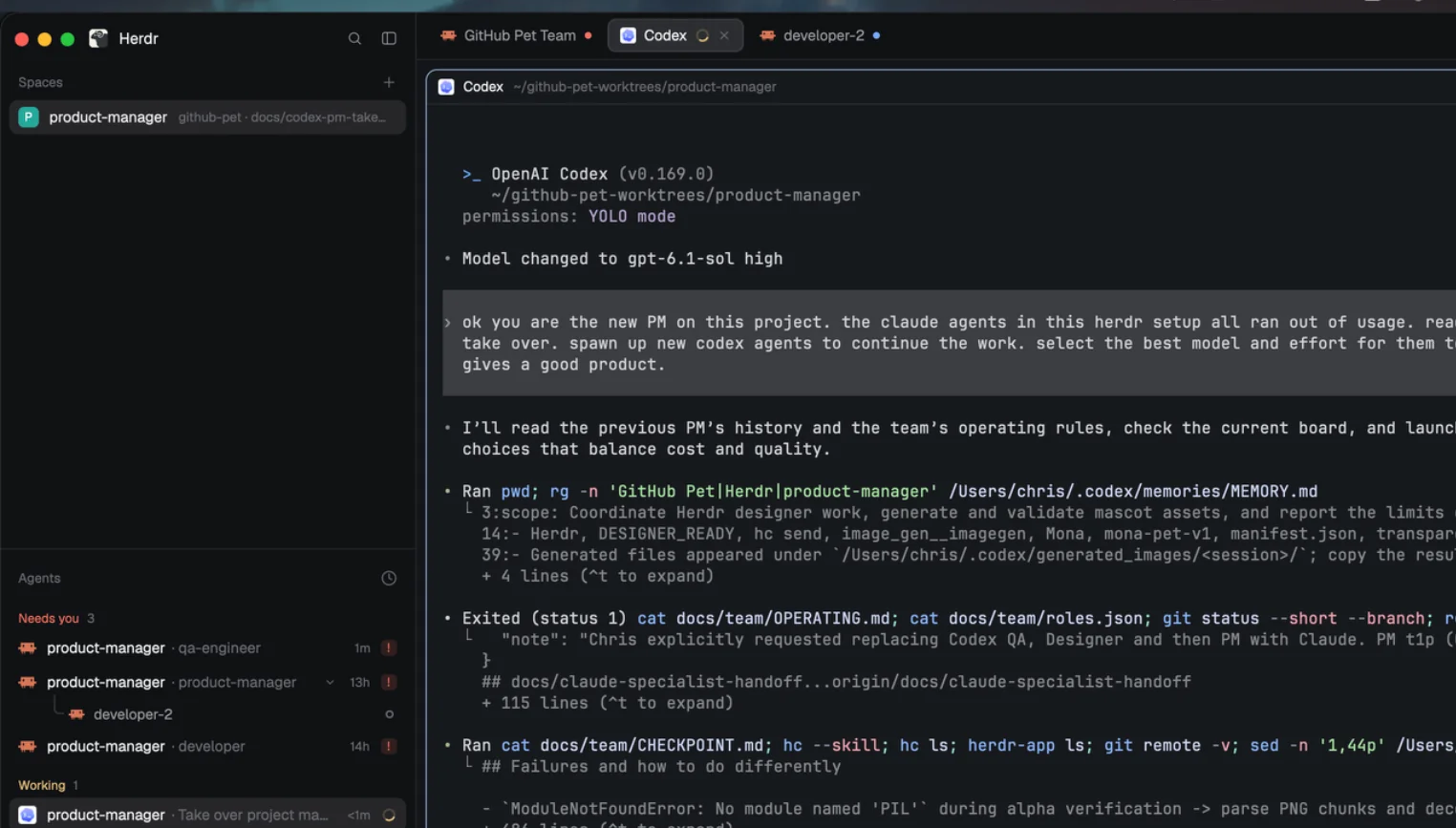
The replacement PM getting oriented. Not exactly the handoff I’d planned, but a useful test of the process.
Then the new team finished the work. Incident monitoring, hover fixes, and app packaging were reviewed, tested, and merged.
I didn’t have to explain the entire project again. The agents could reconstruct it from the same records a new developer would use when joining a team. That’s a much more useful kind of continuity than simply keeping a long chat alive.
A few things I’d do differently
The process hasn’t been perfect. At one point I realized the agents were spending an awful lot of time testing things they’d already tested. QA was independently repeating unit-level checks, and each new finding could start another round of reviews and verification.
I’m all for good test coverage, but I’d started to wonder whether we were spending more effort proving the app worked than actually building it.
My software-development background gives me a pretty straightforward answer: Developers own unit tests and regression coverage. QA owns functional testing. Copilot reviews the code. The PM makes sure we’re building useful features and not getting stuck in an endless review loop. We’ve been moving toward that division of work as the project develops.
I’ve also learned that the PM needs to think about dependencies, not just assignments. Another agent only helps if there’s something independent for it to do. And swapping models is much easier when the project is documented outside the agents themselves.
There are still things I’d like to try, including a dedicated architect role for the harder technical decisions. For now, though, I have a working beta and a much better sense of how I’d organize the next team.
Where this leaves me
GitHub Pet is now a free macOS beta. It uses the locally authenticated GitHub CLI, keeps its actions read-only, and doesn’t need a backend. There’s still plenty to improve, especially around installation and real-world testing.
But the part I want to carry into my next project is the workflow. I can start with an idea, talk it through, turn that conversation into a decent kickoff prompt, and give a small team of agents clear responsibilities. Herdr keeps them working together; GitHub keeps track of what they actually did.
I’m not sure every little project needs a Product Manager, Developer, Designer, and QA Engineer. Probably not. But it’s been interesting to see how much of the old software-development playbook still works when the team is made up of agents.
And I got a little octocat who occasionally catches fire when GitHub does. That’s a pretty good outcome, too.